

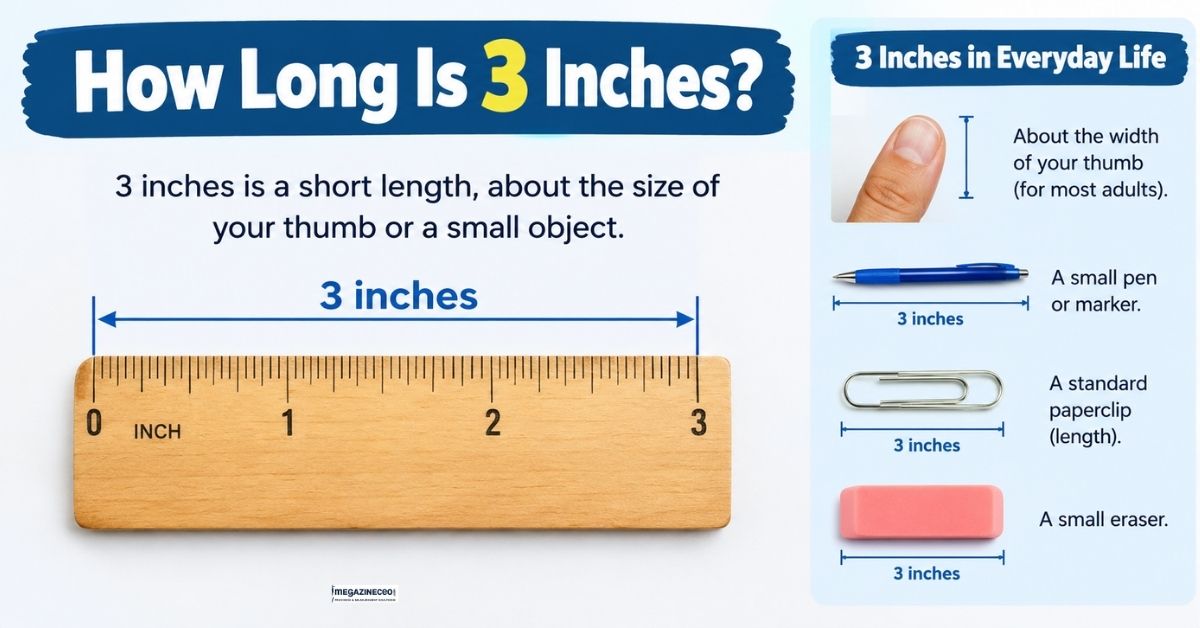
You clicked “buy” on a phone stand. It showed up looking like a toy. The listing said 3 inches, and you pictured something totally different.
Sound familiar? So how long is 3 inches, really? It’s 7.62 centimeters. That’s about the width of a sticky note, and a little shorter than a credit card. Close your fist and it disappears inside.
Here’s the good part. You don’t need a ruler to get this right. You’ve got a dozen things at home that already match. Your keys, a tea cup, even a hockey puck. Let’s find them, one by one.
How Long Is 3 Inches?
3 inches is equal to 7.62 centimeters, 76.2 millimeters, or 0.25 feet. It’s a relatively small measurement that you can easily visualize using common objects around your home.
For example, a standard square sticky note measures 3 inches on each side. An official ice hockey puck also has a diameter of 3 inches. These familiar items give you a better idea of how long this measurement is in real life.
If you’re shopping online or measuring something for a project, remember that 3 inches refers to a specific length. The width, height, or diameter of an object may also be 3 inches, depending on its shape.
3 Inches in Different Units
Three inches can be converted into several other measurement units. Understanding these conversions helps when reading product descriptions, following instructions, or comparing measurements.
Here’s a quick conversion table for 3 inches.
| Measurement Unit | Equivalent |
| Inches | 3 inches |
| Centimeters | 7.62 cm |
| Millimeters | 76.2 mm |
| Feet | 0.25 ft |
| Meters | 0.0762 m |
The conversion is simple because one inch equals exactly 2.54 centimeters. Multiply 3 by 2.54 to get 7.62 centimeters.
3 Inches in Centimeters
If you’re wondering how many centimeters is 3 inches, the answer is 7.62 cm. This conversion is useful because many countries use the metric system instead of inches.
You can calculate it by multiplying the inch measurement by 2.54.
3 × 2.54 = 7.62 cm
For everyday measurements, you can round it to approximately 7.6 centimeters. However, use the exact value when accuracy matters.
3 Inches in Millimeters
Three inches equals 76.2 millimeters. Since one centimeter contains 10 millimeters, 7.62 centimeters converts to 76.2 millimeters.
This measurement is helpful for small DIY projects, crafts, woodworking, and technical tasks. You can find this length on the millimeter side of a metric ruler.
3 Inches in Feet and Meters
Three inches is equal to 0.25 feet, which is one-quarter of a foot. A standard foot contains 12 inches, so dividing 12 by four gives you 3 inches.
In meters, 3 inches equals 0.0762 meters. This measurement is commonly useful when working with metric dimensions or reading technical product specifications.
Read More: 20 Common Everyday Things That Are 5 InchesAbout Long
What Does 3 Inches Look Like?
Numbers don’t always make measurements easy to imagine. Sometimes, comparing a length with something familiar is much more helpful.
Think about a square sticky note on your desk. Its sides are commonly 3 inches long, making it a simple visual reference. An official hockey puck is another excellent example because its diameter is also 3 inches.
Three inches is also shorter than the long side of a standard credit card, which measures approximately 3.37 inches. You can hold a card in your hand to understand how close these two measurements are.
Once you compare 3 inches with familiar objects, it’s easier to estimate this length without constantly reaching for a measuring tool.
20 Everyday Things That Are About 3 Inches Long
You probably have several objects around your home that can help you visualize 3 inches. Some are almost exactly this size, while others are slightly shorter or longer.
The following examples provide useful size comparisons. Keep in mind that dimensions can vary depending on the brand, design, and model.
1. Three Fingers Width
Your fingers can provide a quick way to estimate small measurements. However, the width of three fingers together is usually less than 3 inches for many adults.
Four fingers placed side by side may come closer to this measurement. The exact width depends on your hand size.
Measure your fingers once with a ruler to understand how they compare. After that, you can use your hand as a convenient reference.
2. Small Sticky Note
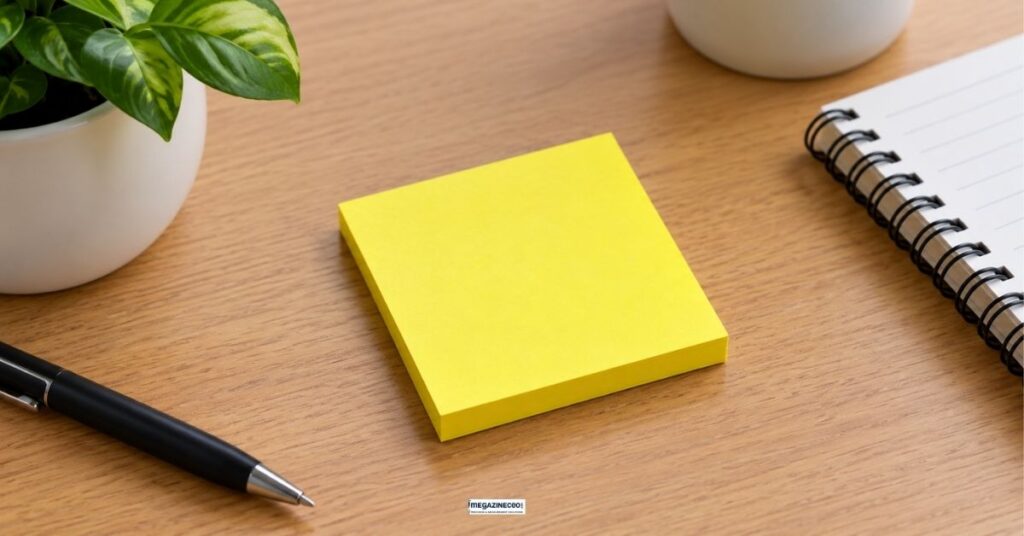
A standard square sticky note is one of the easiest ways to visualize 3 inches. Many popular square sticky notes measure exactly 3 × 3 inches.
This means each side is 3 inches long. You can find these notes in offices, classrooms, and homes.
Place one beside another object to compare their sizes. It’s a simple visual measurement guide that doesn’t require any calculations.
3. Travel-Size Soap Bar
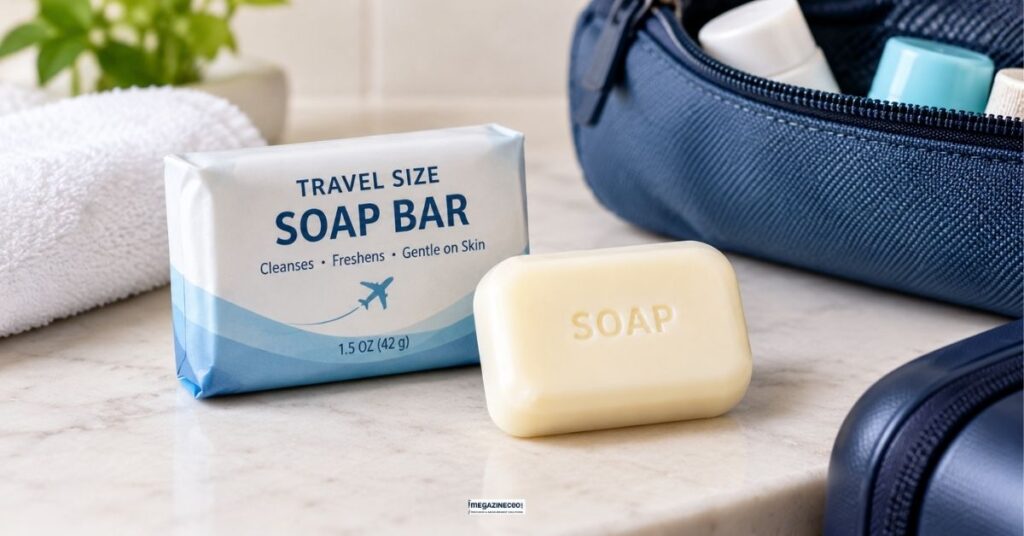
Small travel-size soap bars can also provide a useful size comparison. Many compact bars measure around 2.5 to 3 inches along their longer side.
Their dimensions depend on the manufacturer and shape. Some are rectangular, while others have rounded edges.
Check the length of a small soap bar in your bathroom or travel bag. You may find one that’s close to 3 inches.
4. House Key

A typical house key is another familiar object for estimating small lengths. Many standard keys measure around 2 to 2.5 inches, although some longer designs approach 3 inches.
The length depends on the lock type and key design. Car keys and decorative keys may have different dimensions.
Place your key beside a ruler to see how close it comes to 3 inches. It’s a convenient comparison because most people carry keys regularly.
5. Toothbrush Head
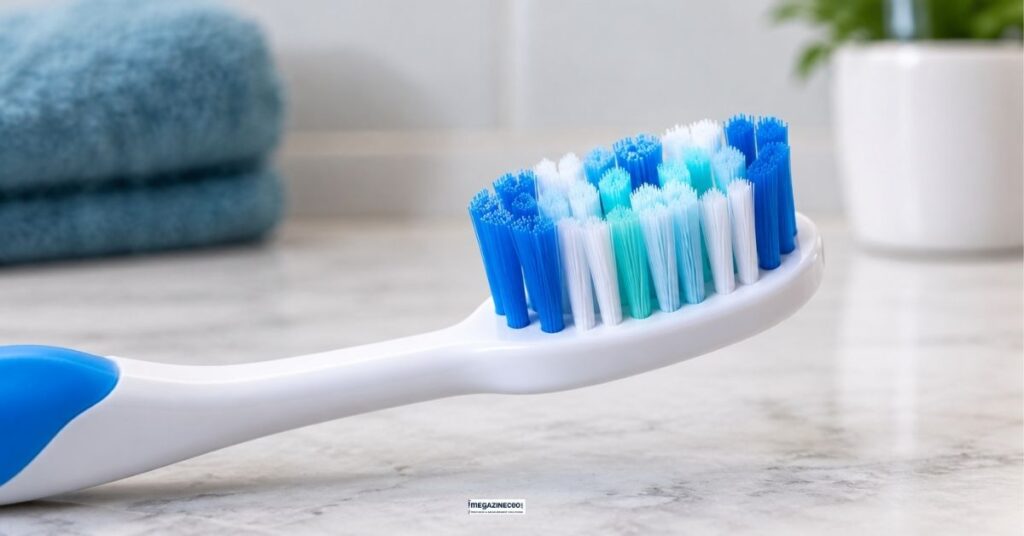
A toothbrush head is generally shorter than 3 inches. However, the head and part of the neck together can provide a closer size comparison.
Many toothbrush heads measure around 1 inch, although designs vary. Adding the neck section increases the overall length.
Take a look at your toothbrush and compare its bristle section with a ruler. This helps you understand how different parts contribute to the total measurement.
6. Small Biscuit Packet
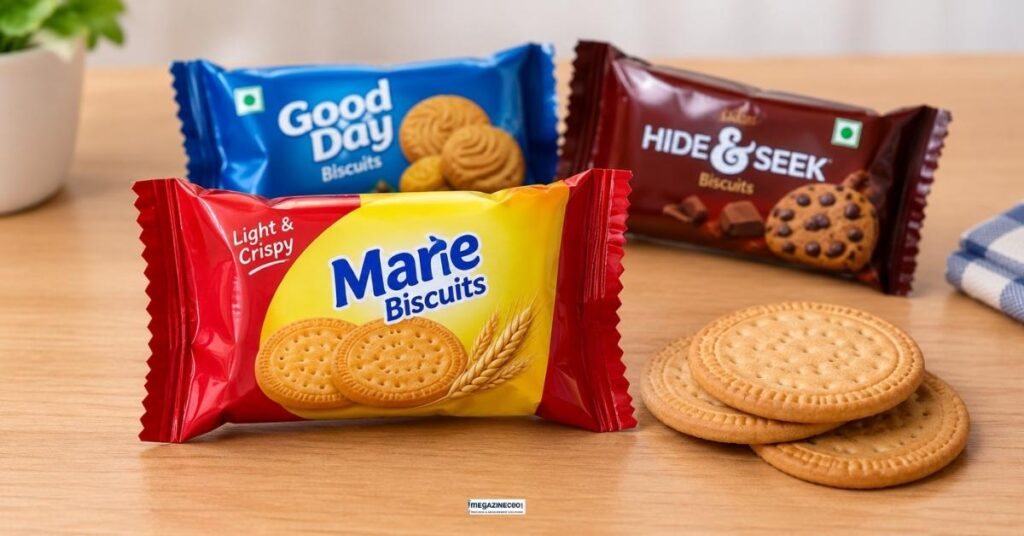
Small biscuit packets come in different shapes and sizes. Some single-serving packets measure approximately 3 inches across their shorter or longer sides.
The actual dimensions depend on the number of biscuits and packaging design. Larger family packets are usually much wider.
Check a small snack packet in your kitchen. It may offer a useful comparison for understanding this measurement.
7. Tea Cup Opening
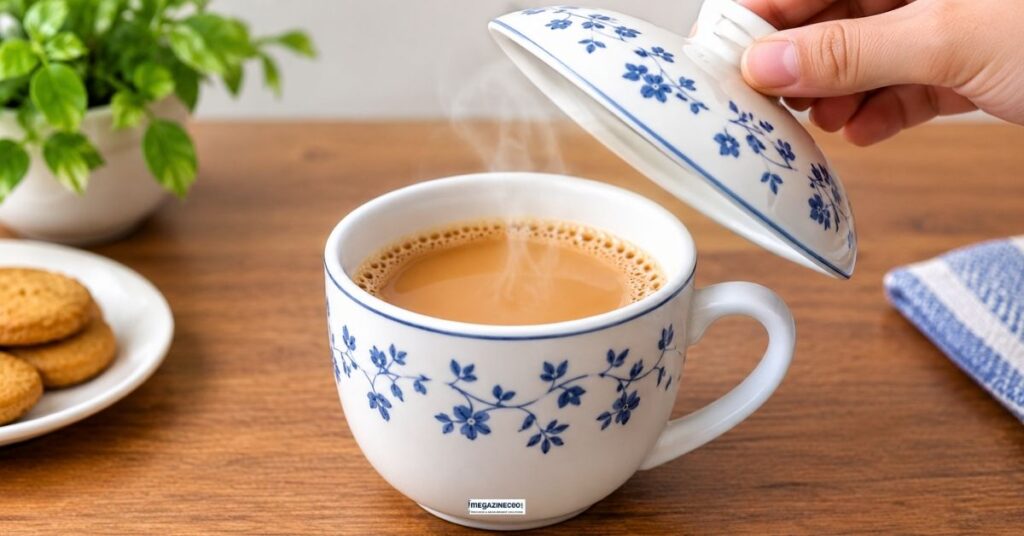
A small tea cup can help you visualize 3 inches across. Some compact cups have an opening measuring approximately 3 to 3.5 inches in diameter.
Larger mugs generally have wider openings. Their dimensions also vary depending on their shape and design.
Measure across the top of your cup to see how close it is to 3 inches. Remember that you’re comparing its diameter rather than its height.
8. Mobile Charger Adapter
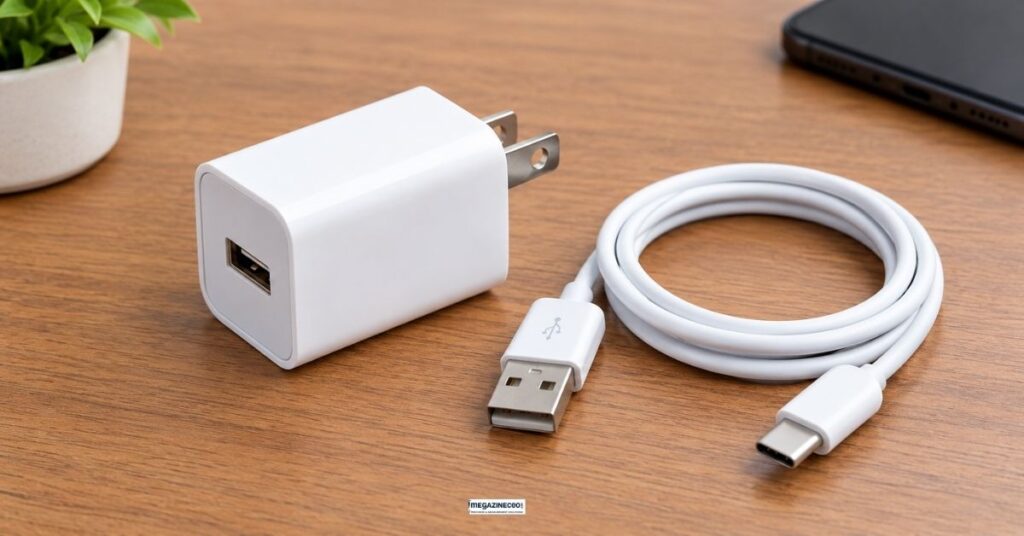
Compact mobile charger adapters are often around 2 to 3 inches long. Some larger adapters may be slightly longer, depending on their design.
Their dimensions can change based on charging speed, plug type, and manufacturer. The prongs may also affect the total length.
Check the adapter you use beside your phone. It can provide a useful example of a small everyday object.
9. Small Remote Control Width
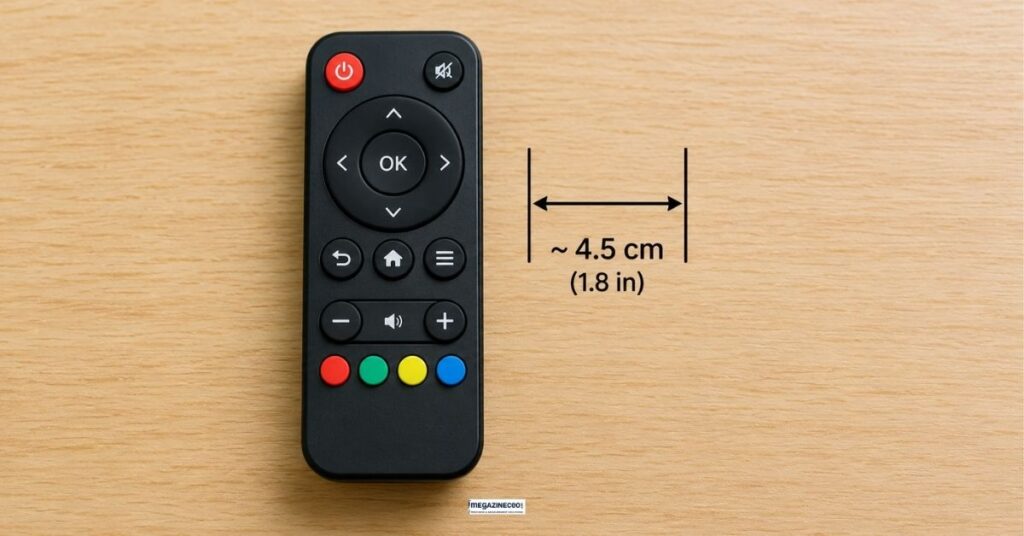
Some compact remote controls have a width approaching 3 inches. However, most standard TV remotes are narrower.
Their width depends on the number of buttons, overall shape, and intended use. Streaming device remotes are often much slimmer.
Measure your remote across its widest point to get an accurate comparison. This also helps you understand the difference between an object’s width and length.
10. Mini Notebook
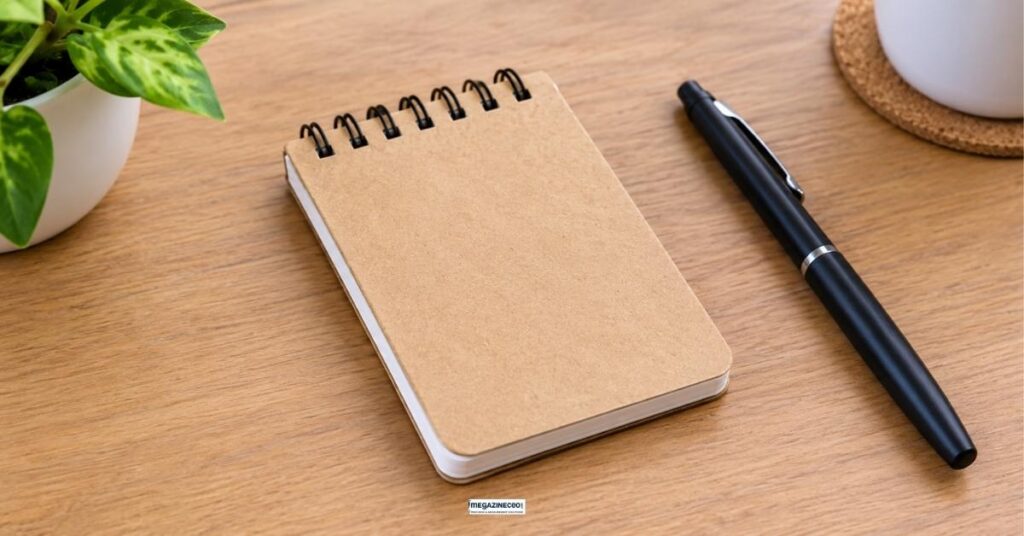
Pocket-sized notebooks are available in many dimensions. Some compact notebooks measure approximately 3 inches across one side.
They’re commonly used for quick notes, reminders, and small lists. Their portable design makes them easy to carry in a bag or pocket.
Find a mini notebook and compare its width with a ruler. You may find that one side is close to 3 inches.
11. Spoon Handle (Top Part)
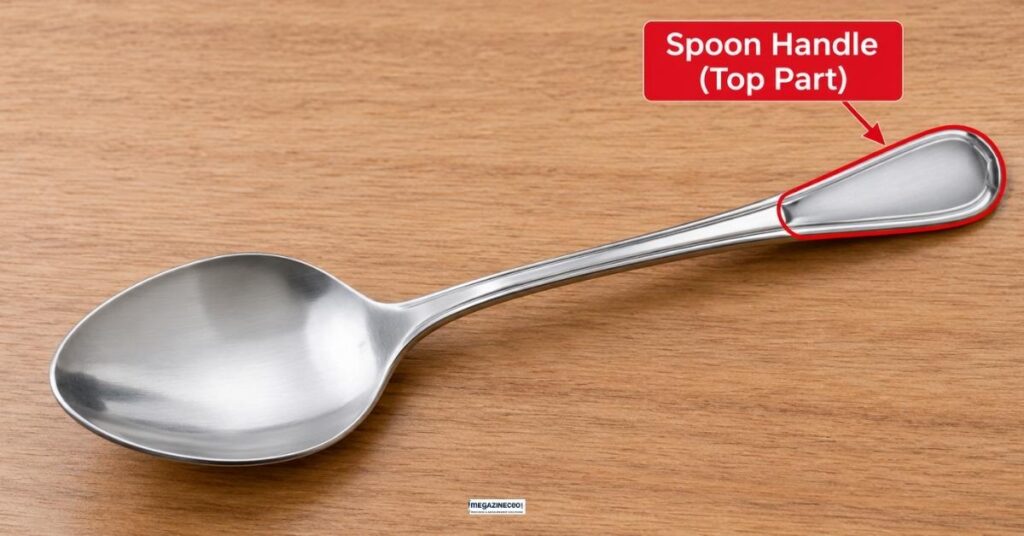
A spoon handle can help you visualize smaller measurements. Some teaspoons have a handle section measuring around 3 inches, depending on the overall design.
The length of the handle varies between teaspoons, tablespoons, and serving spoons. Not every spoon will provide the same comparison.
Place a teaspoon beside a ruler and measure its handle separately. This gives you a better idea of how close it is to 3 inches.
12. Matchbox Length
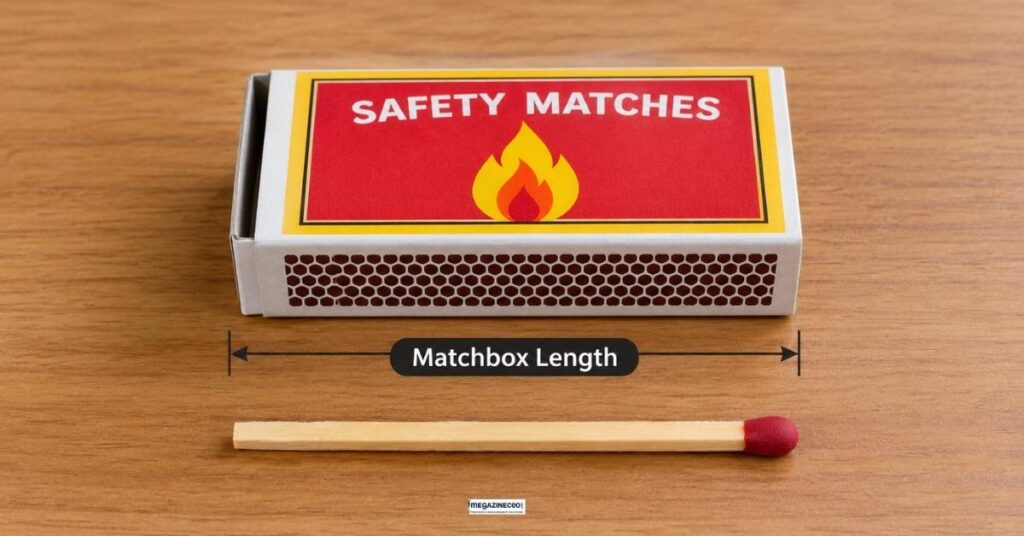
A traditional matchbox is generally shorter than 3 inches. Many standard matchboxes measure approximately 2 to 2.5 inches along their longer side.
Although it’s not an exact match, it can help you picture a length slightly below 3 inches.
If you have a matchbox at home, place it beside a ruler. The small difference will help you understand the size more clearly.
13. Small Cream Tube
Travel-size cream and ointment tubes are often compact enough to fit in a small bag. Some have bodies measuring close to 3 inches, although their caps can increase the overall length.
Their dimensions depend on the product’s capacity and packaging. A small sample tube may be shorter than a regular travel-size tube.
Check the tube from your first-aid kit or bathroom shelf. Measure it from one end to the other for a more accurate comparison.
14. Wallet Card Slot
A standard credit card measures approximately 3.37 inches long and 2.13 inches wide. Therefore, its long side is slightly longer than 3 inches.
A wallet card slot is usually designed to hold a card comfortably. Its dimensions may be slightly larger than the card itself.
You can use a credit card to visualize how close 3 inches is to a familiar everyday measurement. Just remember that the card is about 0.37 inches longer.
15. Small Kitchen Container Lid
Small kitchen container lids are available in different sizes. Some spice jar and storage container lids measure approximately 2.5 to 3 inches across.
Their diameter depends on the container’s capacity and shape. Round lids are particularly useful for visualizing measurements because you can compare their width from one side to the other.
Look through your kitchen cabinets for a small lid. Measure across its center to see whether it matches 3 inches.
16. Index Card Width
A standard 3 × 5-inch index card is exactly 3 inches wide and 5 inches long.
This makes it one of the most reliable everyday examples of a 3-inch measurement. Students, teachers, and office workers often use these cards for notes and reminders.
Hold the shorter side of the card to understand the length. You can also use it as a quick reference when estimating other objects.
17. Hockey Puck
An official ice hockey puck is exactly 3 inches in diameter. It’s approximately 1 inch thick and made from vulcanized rubber.
This makes it one of the best examples for understanding what 3 inches looks like. Its standardized dimensions make it more reliable than many household objects.
Imagine holding a hockey puck in your palm. Its circular width gives you a clear picture of this measurement.
18. Baseball
A standard baseball has a diameter of approximately 2.9 inches. That’s only slightly smaller than 3 inches.
Its round shape makes it a helpful comparison for understanding small measurements. You can hold one in your hand and imagine adding a tiny amount to its diameter.
Although it’s not exactly 3 inches, it’s close enough to provide a useful real-life reference.
19. Disposable Lighter
Many standard disposable lighters measure around 3 inches tall. However, their height can vary depending on the brand and design.
Some compact lighters are shorter, while larger models may be longer. Their width is also considerably smaller than their height.
If you have a disposable lighter, compare its height with a ruler. It can help you picture a length close to 3 inches.
20. Business Card (Long Side)
A standard US business card usually measures 3.5 inches wide and 2 inches tall. Its longer side is therefore half an inch longer than 3 inches.
Business cards are commonly used for sharing contact information. You can find them in offices, shops, and professional settings.
Use the long side as a comparison to understand a measurement slightly greater than 3 inches. It’s a familiar reference that can help with quick size estimation.
How to Measure 3 Inches Without a Ruler
You don’t always have a ruler or measuring tape nearby. Fortunately, several everyday objects can help you estimate 3 inches without using a traditional measuring tool.
Here are some simple methods:
- Use a sticky note: A standard square sticky note is often exactly 3 inches on each side.
- Try an index card: The shorter side of a standard 3 × 5-inch index card measures 3 inches.
- Compare a hockey puck: An official hockey puck has a diameter of exactly 3 inches.
- Use a credit card: Its long side is approximately 3.37 inches, so it’s slightly longer than your target measurement.
- Check your hand: Measure your finger width once to create a personal reference for future estimates.
Can three fingers measure 3 inches? Not necessarily. Finger widths vary from person to person, so it’s better to check your hand against a ruler first.
These methods are useful for casual estimates. However, they shouldn’t replace accurate measuring tools when precision matters.
How to Measure 3 Inches Accurately
Sometimes, estimating isn’t enough. You may need an exact measurement for cutting materials, assembling furniture, completing crafts, or fitting a particular product.
A standard ruler is one of the easiest tools for this task. Follow these simple steps:
- Place the ruler on a flat surface.
- Align the starting point of your object with the zero mark.
- Find the number 3 on the inch scale.
- Check whether the opposite end reaches the 3-inch mark.
- If you’re using a metric ruler, look for the 7.62 cm measurement.
You can also use a measuring tape for longer or curved objects. A flexible measuring tape is especially useful when measuring rounded surfaces.
Always start at the zero mark rather than the physical edge of the ruler. This small step helps prevent measurement errors.
Comparison Between 2, 3, 4, and 6 Inches
Comparing different measurements side by side makes them easier to understand. Even a one-inch difference can change how an object looks and feels in your hand.
Here’s a simple comparison table.
| Length | Centimeters | Everyday Comparison |
| 2 inches | 5.08 cm | Approximately a small matchbox |
| 3 inches | 7.62 cm | A square sticky note |
| 4 inches | 10.16 cm | A little longer than 3 inches |
| 6 inches | 15.24 cm | Half the length of a 12-inch ruler |
The difference between 2 and 3 inches is exactly 1 inch. Similarly, 4 inches is 1 inch longer than 3 inches.
Six inches is twice the length of 3 inches. Understanding these differences makes it easier to estimate measurements when shopping or working on everyday projects.
Where Is 3 Inches Commonly Used?
Three inches is a common measurement in everyday products, household items, and DIY projects. You may come across it when buying something, following instructions, or checking product dimensions.
Here are some common examples:
- Screws and nails: Some hardware products are available in 3-inch lengths.
- Hair accessories: Certain hair clips and styling accessories measure around 3 inches.
- Packaging: Small boxes, tubes, and product containers may have 3-inch dimensions.
- Craft supplies: Sticky notes, index cards, and decorative materials often use this measurement.
- Gardening: Some small seedling pots measure approximately 3 inches across.
- Office supplies: Index cards and other stationery products provide useful 3-inch references.
The measurement can refer to an object’s length, width, height, or diameter. Always check which dimension a product description is showing before making a purchase.
Common Mistakes When Estimating 3 Inches
Estimating small measurements seems easy, but a few common mistakes can lead to inaccurate results. Understanding them helps you avoid problems when measuring or purchasing products.
Here are some mistakes to watch out for:
- Confusing length and width: An object may be 3 inches wide but much longer.
- Trusting every household item: Similar products can have different dimensions depending on their brand and design.
- Using fingers as an exact measurement: Finger widths vary between people, so hand measurements are only estimates.
- Starting from the ruler’s edge: Always align your object with the zero mark.
- Mixing inches and centimeters: Three inches equals 7.62 centimeters, not 3 centimeters.
- Ignoring product specifications: Online pictures can make objects look bigger or smaller than they really are.
For important projects, always double-check your measurements with a ruler or measuring tape. A small mistake can affect how well an item fits or works.
FAQs About 3 Inches
What Is 3 Inches in Centimeters?
Three inches equals 7.62 centimeters. You can calculate this by multiplying 3 by 2.54, which is the exact number of centimeters in one inch.
Is 3 Inches Big or Small?
Three inches is generally considered a small length. It’s approximately the width of a standard square sticky note and the diameter of an official hockey puck.
However, whether it’s big or small depends on what you’re measuring. Three inches may be large for a small accessory but short for a household tool.
How Can I Measure 3 Inches Without a Ruler?
You can use a standard square sticky note, a 3 × 5-inch index card, or an official hockey puck to estimate 3 inches.
A credit card can also help because its long side measures approximately 3.37 inches. These objects are useful for quick comparisons when you don’t have a ruler nearby.
What Objects Are About 3 Inches Long?
Several everyday objects are close to 3 inches in one of their dimensions. Examples include small soap bars, house keys, compact charger adapters, mini notebooks, and disposable lighters.
A square sticky note and an official hockey puck provide more reliable examples because their standard dimensions are exactly 3 inches along the relevant side or diameter.
How Many Millimeters Are in 3 Inches?
There are 76.2 millimeters in 3 inches. Since one inch equals 25.4 millimeters, multiplying 25.4 by 3 gives you 76.2 mm.
Conclusion
Now you know exactly how long 3 inches is and how to compare it with everyday objects. It equals 7.62 centimeters or 76.2 millimeters, making it easy to understand with a ruler or familiar items like a sticky note and hockey puck.
You can also estimate this measurement using objects around your home. Just remember that everyday items vary in size, so use a ruler when you need an accurate measurement.

Aaron Wells
Aaron Wells is a measurement content writer and researcher at Megazine CEO. He focuses on clear explanations of measurement units, conversions, calculations, and practical applications. His work emphasizes careful research, understandable language, and useful examples, helping readers build confidence when interpreting everyday and technical measurement information.